
Originally published in The Gowanda News on Jan. 11, 2013.
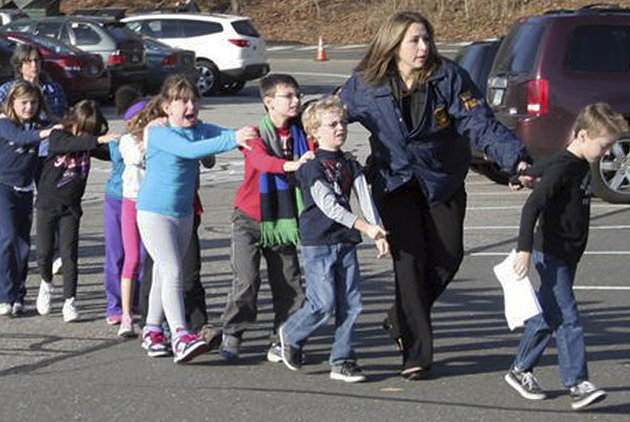
The Sandy Hook Elementary School shooting shocked the entire country. Newscasters described it as an “unthinkable tragedy” and scared the country with the news story they had to tell. It hit close to home and woke us up –– what are we doing to ensure this doesn’t happen again?
“It looks like things are going to have to change,” said Charles Rinaldi, superintendent of schools at Gowanda. “Every time something happens like it did at Sandy Hook, it makes you go back and think again about what you need to do.”
He went on to explain the practicalities of school safety that only someone from his perspective can relay.
“Safety plans are too cumbersome,” Rinaldi said. Plans need to be shortened to a smaller pamphlet that one can easily look through. “When new teachers come on, we train each and every one of them about safety precautions.”

“Those are things we have to be prepared to deal with and it’s almost too much,” Rinaldi said.
One safety point from Sandy Hook that Rinaldi really noticed was the importance of easily locking doors and how the teachers at Sandy Hook saved lives by doing so.
“When we got back in on Monday (following the shooting), we did an audit of all three buildings –– how easy is it to lock your door from the inside and what mechanism do you need to use?”
He found that, in almost every instance, teachers and staff can lock doors with a key from the inside. Vintage doors in the high school’s older wings, however, may need to be updated. The older doors can be locked, but only –– inefficiently –– from the outside.
“Other things we’ve considered, but frankly I think are unfeasible, is basically turning every building into a bunker,” Rinaldi said. The bunker idea includes fireproofing and bulletproofing the windows, but at a hefty price: just replacing a single glass window in a wooden door costs $2,000. “If we replaced all the glass, we’re talking multi-million dollars, something that the district alone can’t afford.”
Rinaldi expressed more concerns about that plan, “If you put bulletproof glass on the doors, the doors themselves are not bulletproof.”
There have also been questions about individuals volunteering to be in the schools during the school day. That question brings up more questions. “What qualifications does anyone have to come into school and patrol?” Rinaldi asked.
Gowanda is one of the few districts that still has School Resource Officers (SRO) in every building. With help from the Seneca Nation of Indians, Gowanda has two full-time SROs. “We have armed and trained officers in the buildings at all times,” Rinaldi said.
Rinaldi invited state troopers, Erie County Sheriffs, Cattaraugus County Sheriffs, Seneca Nation Marshals, Gowanda Police, Gowanda Emergency Response, area fire departments and the schools’ own staff to a meeting on Wednesday, Jan. 16. “All have been invited to resurrect our plans and try to decide what we’re going to do in the case of an active shooter incident.”
A lockdown drill for all three buildings will be discussed and carried out in the spring.
Following Sandy Hook, Rinaldi sent out an email to the staff, asking what they believed the school could do to be safer. Among the many responses was the concern over letting visitors inside the building too easily.
“If someone appears at a door, a student will open it,” Rinaldi said, revealing a flaw that needs to be taken care of.
Cameras film around the perimeter of the building, at Hillis Field and in the hallways. Workers in the main office(s) are more careful about who is let into the building and the hallway cameras have helped with instances of bullying and theft.
Another issue that arose was whether or not the building should be locked up after the school day’s end, despite sport practices.
“I hope that there’s not a scent of it out there that we will have armed guards at every door, with bulletproof vests and guns out and metal detectors to try and detect every person who comes through the doors,” Rinaldi said. “I hope we don’t reach that stage. I hope we haven’t reached that stage. That’s not safety, that’s paranoia.”
Relating to paranoia, Rinaldi said, “To do all of the things that that it would take to satisfy every eventuality and every community concern is just beyond common sense and also beyond any level of affordability.”
Rinaldi and the staff at Gowanda’s schools are going to do the best job possible with available resources to ensure the safety of each and every child stays intact.
“I’m a believer that the best defense is a very positive school climate where students and parents feel that they can call and talk to us at any time and tell us anything they pick up on Facebook or on Twitter,” Rinaldi said. “That’s the best defense, I think. And that requires a good relationship between students and staff.”
 Emily M. Steves: Portfolio of Work
Leave a comment